A first tooth. A hospital bracelet. The printed programme from a graduation you cried through. Most of us keep these things — the question is where, and in what. Two formats do most of the work: the memory box, which gathers and stores, and the framed keepsake, which selects and displays. They are not competing for the same job. Choosing badly is how a milestone ends up either in a shoebox under the bed or faded behind glass in direct sun. Here is how to decide.
Two different jobs, not two rival products
A memory box is a container — archival board, wood, linen-covered, whatever suits the room — that holds several objects together and keeps them out of view. A framed keepsake takes one item, or a small deliberate arrangement, and puts it behind glass or acrylic where you see it every day.
So the first question is not which one looks nicer. It is: is this milestone one object or a cluster of them? A christening brings a gown, a candle, a card, a photograph and a lock of hair. That is a cluster, and no frame will hold it gracefully. A single pressed flower from a wedding bouquet is one object with a story, and it deserves the wall.
Frames edit. Boxes accumulate. Both are useful, and most families eventually need each.
Space: wall real estate versus shelf real estate
Frames ask for wall. That sounds cheap until you try to hang five of them in a hallway and realise you have committed a whole wall to one year of your life. Deep items make it harder still: a baby's first shoe set in a frame needs a shadow box with two to four inches of internal depth, and that box will stick out from the wall. Measure the wall and the depth before you order anything.
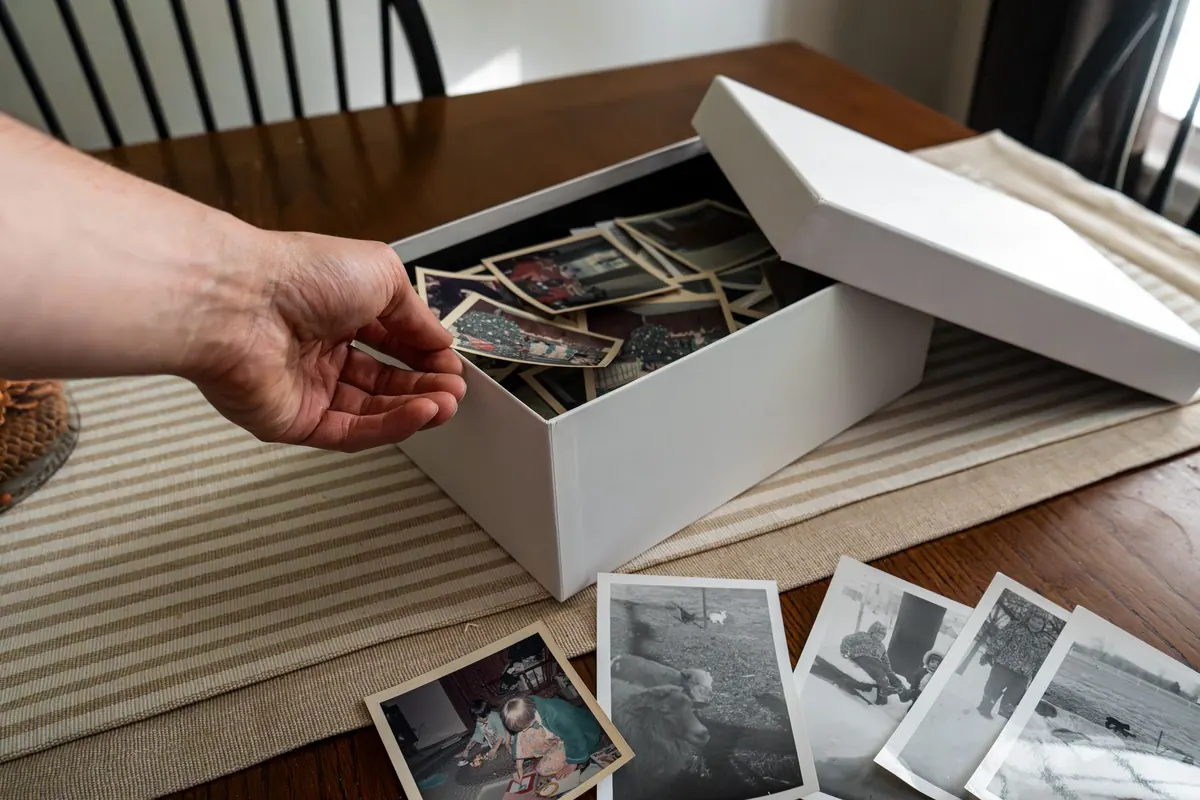
Boxes ask for footprint — a shelf, the top of a wardrobe, the inside of an ottoman. They stack, they scale, and they can hold forty items for the space one shadow box takes. The trade-off is that hidden space is easy to forget. Give the box a permanent home, not a temporary one, or it becomes a thing you move from cupboard to cupboard every spring.
A small habit that pays off: keep an index card inside the lid listing what is in the box and the date each item went in. Future-you will not remember which year the second tooth came out.
Protection: what each format handles well
Frames stop handling, not light
Behind glass, an item is safe from sticky fingers, dust and the occasional knock. It is not safe from sun. Ultraviolet light fades ink, fabric and photographs faster than most people expect, and a south-facing windowsill is the worst place in the house for a wedding invitation. Ask for UV-filtering glass or acrylic, insist on a mat so the item never touches the glazing, and hang away from direct sun. Tape, glue and spray adhesive are the enemies here; a good framer will use archival mounts instead.
Boxes stop light, not damp
A closed box shields contents from light and dust, which makes it the better home for textiles, documents and anything you want to keep for decades. It does not shield them from humidity, heat or insects. Attics swing between extremes and basements stay damp; neither is a good home for paper and fabric. Choose an interior cupboard in a living space instead.
- Wrap textiles in acid-free tissue, never in a sealed plastic bag — trapped moisture causes mildew.
- Store photographs flat, separated by acid-free paper, away from newspaper clippings, which stain.
- Keep rubber bands, PVC sleeves and cheap adhesive labels away from anything you care about.
- If a room feels damp, add a small silica packet and replace it twice a year.
- Handle textiles with clean, dry hands, and wash them before storage only if you know the fabric can take it.
For genuinely valuable or fragile pieces — a silk gown, a wartime letter, a piece of jewellery with provenance — a conservator's advice is worth more than any product on a shelf.
Emotional impact: seen daily versus rediscovered
A frame works quietly and constantly. It tells a child their own story every time they walk past it. It gives guests something to ask about. It anchors a room. The risk is familiarity: after two years on the same wall, you stop seeing it, and it becomes decoration rather than memory.
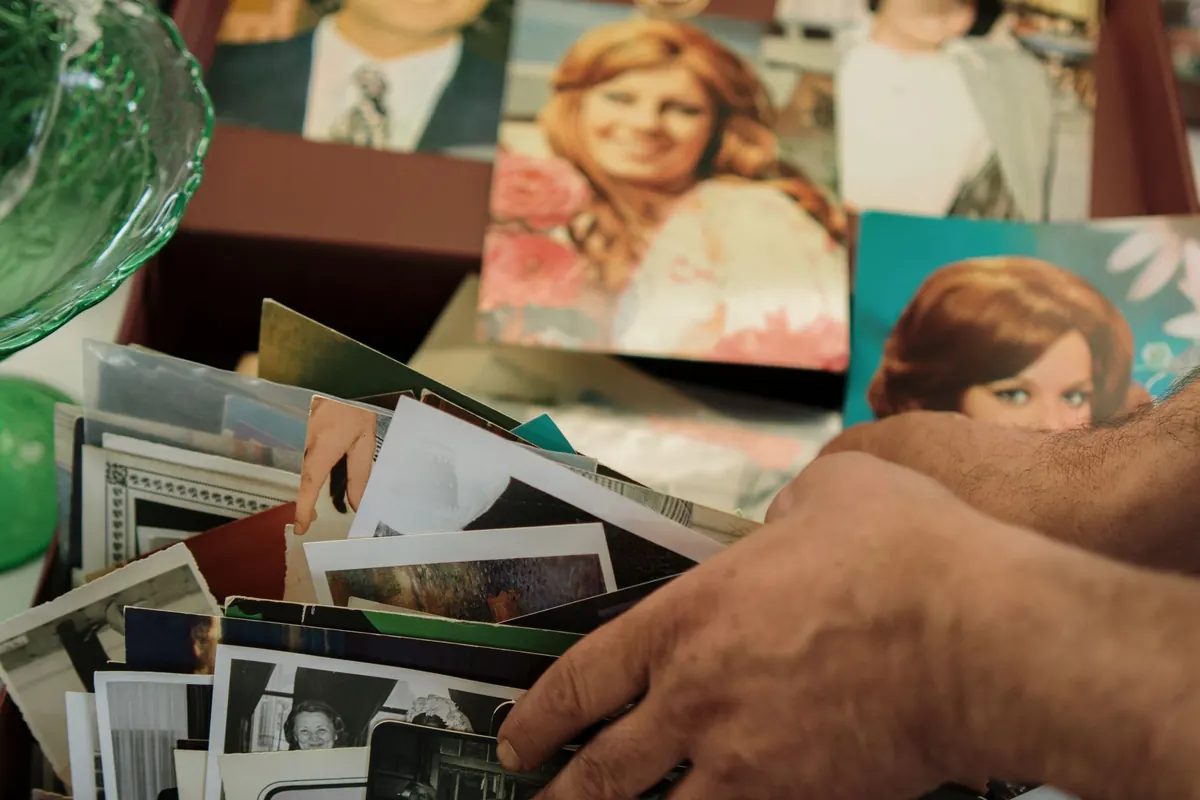
A box works in bursts. Opening it is an event, which is why families tend to do it on birthdays, anniversaries, New Year's Eve, or the night before a big move. It holds the messy whole rather than the tidy summary — the cards, the hospital wristband, the congratulations note from someone no longer here. Some people find boxes heavier for exactly that reason.
A frame answers "what do we show?" A box answers "what do we keep?" Most families need both answers.
Matching the item to the format
Use this as a rough guide rather than a rulebook:
- Flat and single — wedding invitation, first drawing, pressed flower, concert ticket, birth announcement. Frame it. These items are born to be seen.
- Deep or three-dimensional — first shoes, a rattle, a hand cast, a medal, a key. Shadow box if it is one hero object; memory box if it is part of a set.
- Textiles — christening gown, first outfit, a sports jersey. Box, folded loosely with acid-free tissue. Only frame textiles that are small and flat, and only with a framer who knows how to mount them without stitching through the fabric.
- Ongoing collections — a school year, a baby's first twelve months, a wedding planning folder. Box. You need somewhere to add to, and a frame freezes the story too early.
- Anything irreplaceable — photographs, letters, documents. Box the original, frame a good print. That way sunlight, dust and gravity damage a copy.
If you are torn, photograph the item before it goes into storage and frame the photograph. A well-lit print of a first pair of shoes, taken on a plain background, often looks better on a wall than the shoes themselves.
The hybrid route most people end up choosing
Frame the hero piece and box the rest. Keep three or four frames active and rotate the contents once a year, so the wall stays alive and the box stays relevant — the framed item becomes the cover of the book, not the whole book.
When you commission a frame, ask for a back you can open without destroying it. Hinged backs on standard frames and magnetic fronts on shadow boxes cost little and make rotation realistic. If a frame is sealed shut, you will never change what is inside it.
How to decide in ten minutes
Before you buy anything, run through this quickly and honestly:
- Count the objects. One item points to a frame; five point to a box.
- Judge depth and fragility. Anything deeper than an inch, or too delicate to mount, belongs in a box.
- Choose the spot first. Wall space or shelf space, with measurements written down. Buy second.
- Check the light and the damp. No direct sun for frames, no attic or basement for boxes.
- Write the story down. A short note — what it is, whose it was, the date — turns an object into a keepsake. Put it in the frame's back or the box's lid.
- Set a review date a year out. Open the box, look at the frames, and move one thing.
Whatever you choose, label it and tell someone in the family what it is. A memory box that nobody dares open, or a frame whose story has been forgotten, protects the object and loses the point. The best keepsake is the one that can still explain itself in thirty years.
Photo: fish socks / Pexels